Is Global Fraud Index Worth It? An Honest Look at What You Actually Get
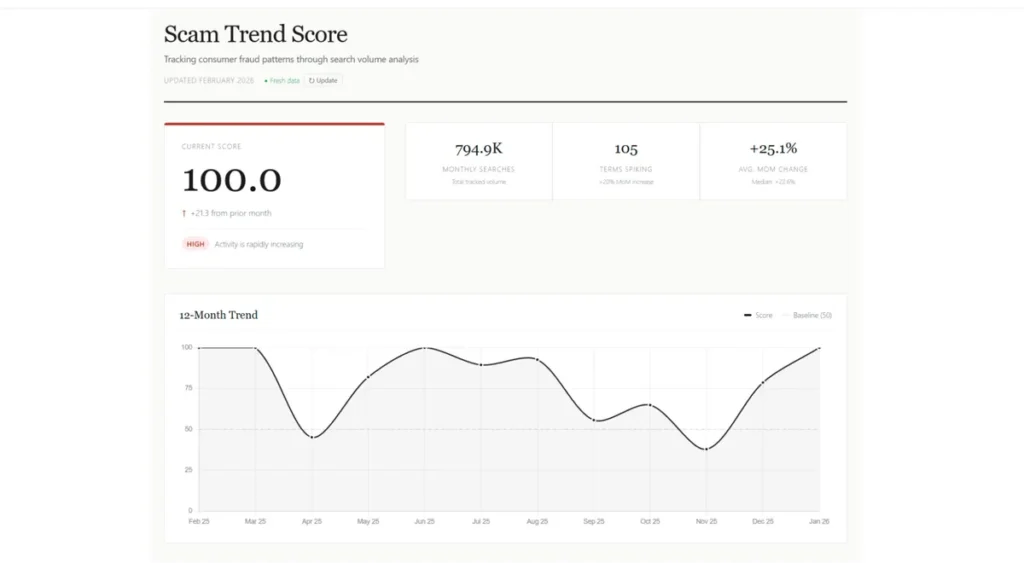
In an era where “data is the new oil,” we are constantly being sold the next big dashboard, the next “revolutionary” metric, and the next “definitive” index. Enter Civoryx, a platform claiming to be the Global Fraud Index. It promises to give you a “real-time lens” into the murky world of digital deception.
But let’s be real: when a company claims to offer a “transparent signal” of global fraud trends for the low, low price of absolutely nothing, our inner skeptics should be screaming. Is Civoryx a breakthrough in cybersecurity transparency, or is it just another oversimplified metric in a world already drowning in noise?
We took a deep dive into the Scam Trend Score to see if it’s actually worth your time—or if it’s just a glorified Google Trends report with a fancy coat of paint.
The “Secret Sauce”: What is the Scam Trend Score?
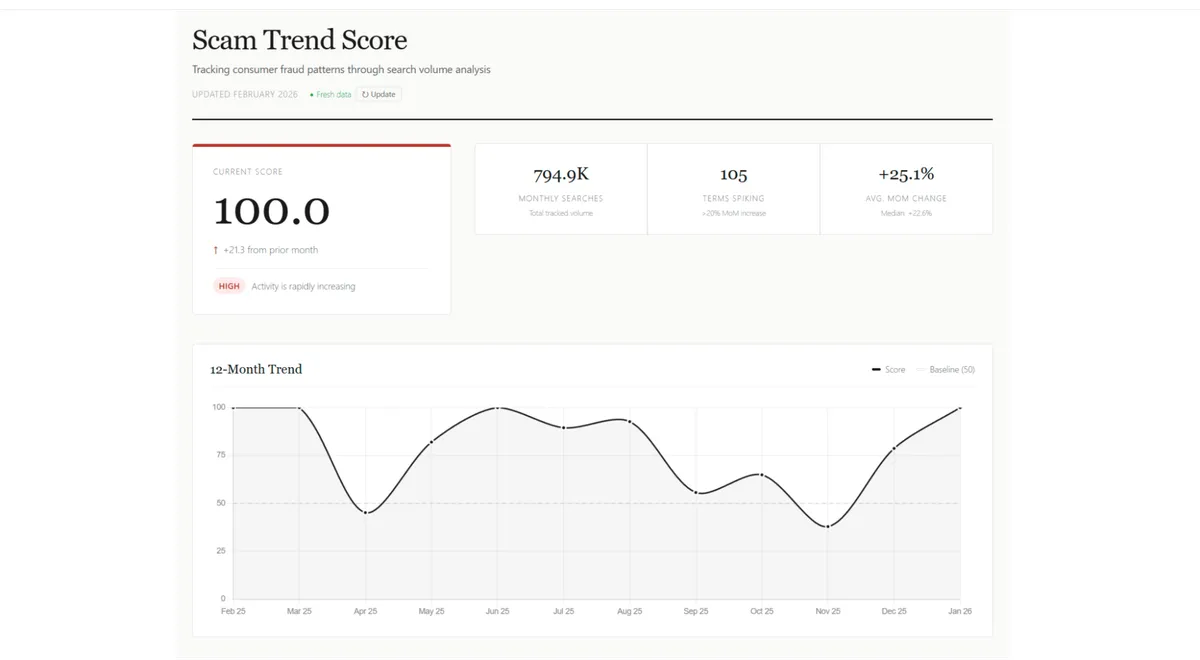
Civoryx markets itself as a “composite metric” designed to surface fraud shifts before they hit the headlines. The logic is simple: when people get scammed (or suspect they are being scammed), they turn to search engines.
The platform tracks 150 keywords, ranging from “phishing” and “identity theft” to more specific lures like “Geek Squad scam” or the “Zelle scam.” They then apply a three-layer process:
- Monitor: Continuous tracking of search volume.
- Measure: Calculating month-over-month (MoM) velocity.
- Score: Weighting those changes by absolute volume to create the Scam Trend Score.
The marketing says: “No opinions. No speculation. Just data.” The reality? Data without context is just a numbers game. While Civoryx accurately tracks what people are searching for, search volume doesn’t always equal criminal activity. A viral news story about a “WhatsApp scam” could cause the Scam Trend Score to spike, even if the actual number of victims is decreasing.
Is it a “real-time lens” or a “lagging indicator of public anxiety”? The answer likely lies somewhere in the middle.
The Price Tag (Or Lack Thereof)
One of the most suspicious things about Civoryx is the cost: $0.
In a world of SaaS subscriptions and “Freemium” traps, Civoryx claims to be “Free. Fully. Permanently.” No gated features, no premium tiers, no account required.
“We believe fraud transparency shouldn’t have a price tag. The data is open because the problem is universal.” — Civoryx
While this sounds noble, the skeptic asks: What’s the catch? Usually, if you aren’t paying for the product, you are the product. However, since Civoryx doesn’t even require an account, they aren’t harvesting your data in the traditional sense. It appears to be a pure public utility play—perhaps a loss-leader for a parent cybersecurity firm or a genuine philanthropic effort to democratize fraud data.
Can Civoryx Underrepresent Fraud Trends?
Before you start using the Scam Trend Score to dictate your company’s security budget or your personal paranoia levels, there is one major limitation you need to understand: Civoryx data may underrepresent fraud trends in regions with low internet penetration.
Because the index is built entirely on search volume, it inherently favors “online” populations. In many parts of the developing world, where “pig butchering” scams or door-to-door fraud might be rampant but search engine usage is low, Civoryx remains virtually blind.
If you are looking for a truly “Global” index, you have to acknowledge that “Global” in this context mostly means “The Connected West.” For a platform aiming to be the definitive index, this is a significant blind spot that users must account for.
Is the Keyword Index Robust Enough?
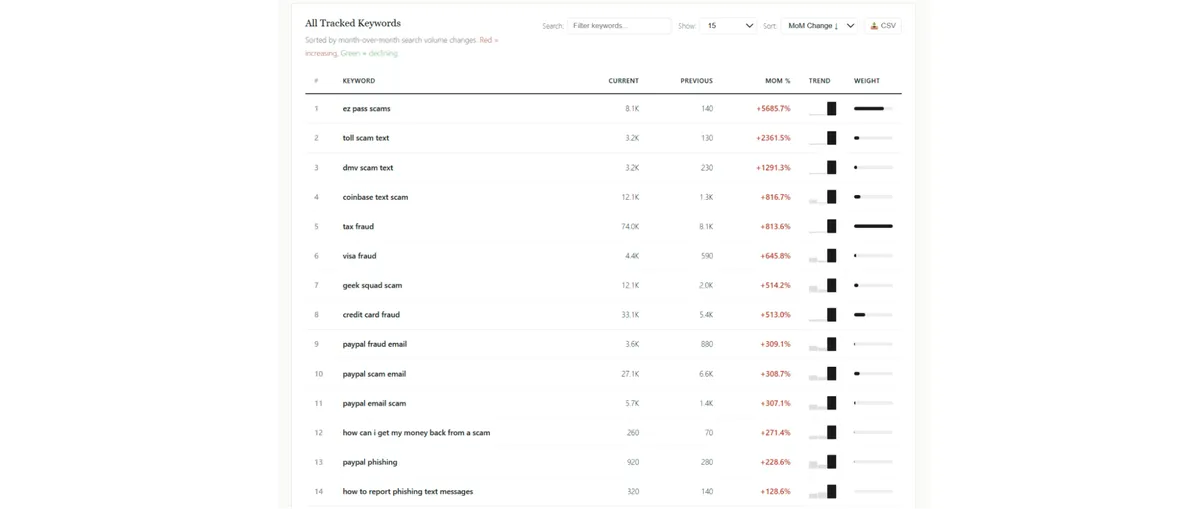
Civoryx monitors over 150 terms. We looked at the list, and it’s a “Who’s Who” of digital misery. It covers the classics:
- Phishing/Vishing: “Phishing email,” “Smishing scam,” “Scam call.”
- Platform-Specific: “Facebook Marketplace scams,” “Poshmark scams,” “Amazon scam.”
- Financial/Gov: “Tax fraud,” “Zelle scams,” “Medicare fraud,” “E-ZPass scams.”
The inclusion of terms like “how to report a scam” and “where to forward phishing emails” is actually quite clever. These are “intent-based” keywords that signal a user has already encountered a threat.
However, the “150 keywords” limit is a double-edged sword. Fraudsters are creative; they invent new names and methods every week. If the index isn’t updated with extreme frequency, it risks missing the “Next Big Thing” until it’s already old news—the very problem Civoryx claims to solve.
Who Does the Civoryx Global Fraud Index Actually Serve?
Civoryx claims to be for “anyone,” but let’s break down who actually gains value here:
| User Type | Use Case | Value Rating |
| Cybersecurity Pros | Monitoring macro-trends for board reports. | ⭐⭐⭐ |
| Journalists | Finding “hooks” for stories based on what’s trending. | ⭐⭐⭐⭐ |
| Compliance Teams | Identifying which scam types are currently “hot” to train employees. | ⭐⭐⭐ |
| Everyday Users | Checking if that weird text they got is part of a global surge. | ⭐⭐ |
For the average consumer, checking a “Scam Trend Score” daily is overkill. But for a researcher needing a quick, visual pulse on whether “Romance Scams” are up 20% this month, it’s a goldmine of pre-calculated data.
The Verdict: Revolutionary Tool or Shiny Distraction?
So, is the Global Fraud Index worth it?
The Pros:
- Zero Barrier to Entry: No paywall is a huge win for transparency.
- Aggregated Signal: It saves you the hours of manual work required to pull and weight search data yourself.
- Transparency: They tell you exactly what they track and how they weight it.
The Cons:
- The Internet Gap: As mentioned, it’s biased toward high-internet-penetration regions.
- Sentiment vs. Reality: It measures curiosity and fear (search volume), which is a proxy for fraud, not a direct measurement of it.
- Limited Scope: 150 keywords is a drop in the bucket of the total fraud landscape.
Civoryx isn’t a crystal ball, and it’s not a replacement for a robust antivirus or common sense. It is, however, a very clean, very honest macro-indicator.
If you go into it expecting a 1:1 map of every crime committed on earth, you’ll be disappointed. But if you use it as a “Weather Report” for the internet’s darkest corners, it’s arguably the best free tool on the market.
In a world where most “Fraud Reports” are 50-page PDFs released once a year by banks, a real-time, public index is a breath of fresh air—even if it has its flaws.
FAQ
What exactly is the Scam Trend Score?
The Scam Trend Score is a single, composite number that reflects the current “heat” of fraud activity worldwide. It isn’t based on hearsay or headlines. Instead, it aggregates the month-over-month search volume changes for over 150 specific fraud keywords. By weighting these terms based on their absolute search volume, the score provides a transparent signal of whether scam interest is accelerating or cooling off.
Is the data truly global?
While Civoryx monitors trends across the internet, there is a necessary caveat: Civoryx data may underrepresent fraud trends in regions with low internet penetration. Because the index relies on search engine data, it is most accurate in highly connected digital economies. In areas where offline scams are more prevalent or internet access is limited, the index may not capture the full scope of local fraud activity.
How often is the Index updated?
The index is updated regularly to ensure the data remains “real-time.” Unlike annual reports from financial institutions that look at data from six months ago, Civoryx aims to surface shifts as they happen. This allows researchers and journalists to see a spike in “toll scam texts” or “AI voice scams” before they become mainstream news.
Why is it free? Is there a catch?
There is no catch. Civoryx is a public utility intended to democratize fraud transparency. There are no premium tiers, no gated features, and no account registration required. The goal is to provide a universal lens into fraud evolution without a price tag.
Can I use this data for my own research?
Yes! Civoryx is designed for anyone—from compliance teams and cybersecurity pros to students and curious consumers. Since the data is public, you can use the trends to inform your security posture or simply to stay one step ahead of the latest phishing tactics.